
Prayer Room
Prayer Requests
Prayer Partners
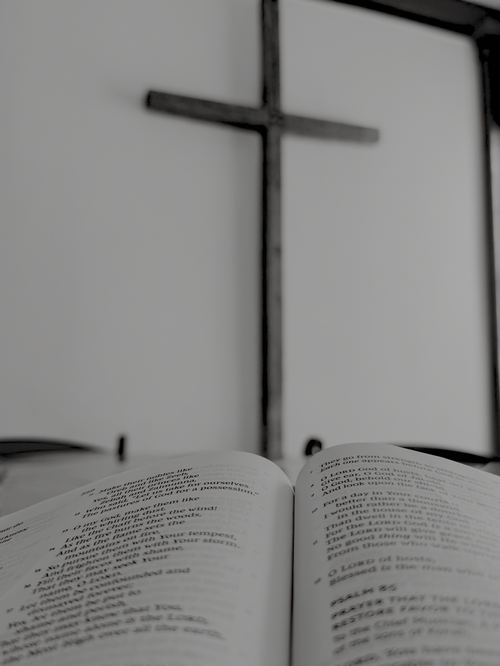
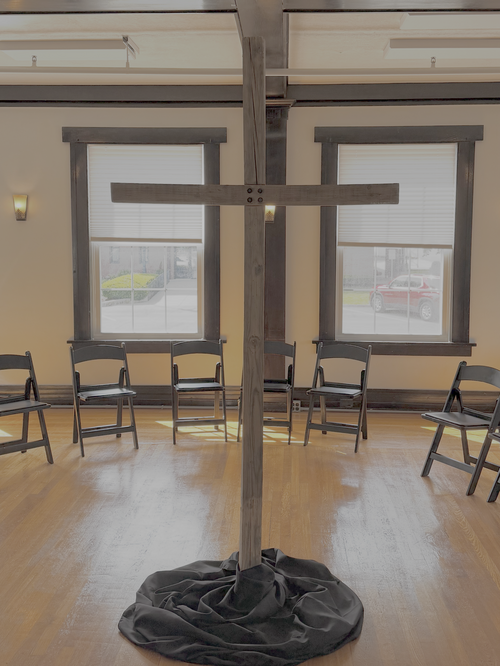
Our upper room is open to anyone desiring to remain in God's presence through prayer, Scripture reflection, worship, or journaling. Worship music is playing to create an atmosphere of peace and focus as you draw near to Him.
Take your time, quiet your heart, and allow the Lord to minister to you. As Scripture reminds us, "Be still, and know that I am God" (Psalm 46:10). May this be a place of peace, renewal, and deeper communion with the Father. His presence is here, and there is room for you.
Tuesdays from 6am-8am
Wednesdays from 12am-2pm
Thursdays from 2pm-4pm
Take your time, quiet your heart, and allow the Lord to minister to you. As Scripture reminds us, "Be still, and know that I am God" (Psalm 46:10). May this be a place of peace, renewal, and deeper communion with the Father. His presence is here, and there is room for you.
Tuesdays from 6am-8am
Wednesdays from 12am-2pm
Thursdays from 2pm-4pm
Need prayer? You don't have to carry your burdens alone. If you'd like prayer for yourself, your family, a situation, or simply want someone to agree with you in faith, our prayer team is available and ready to pray with you.
We count it a privilege to stand with you and believe God for His peace, comfort, guidance, and breakthrough in your life.
Please feel free to connect with one of our Prayer Partners before or after service or submit your request by clicking on the button below.
We count it a privilege to stand with you and believe God for His peace, comfort, guidance, and breakthrough in your life.
Please feel free to connect with one of our Prayer Partners before or after service or submit your request by clicking on the button below.
Our Prayer Partners play a vital role in supporting our ministries through prayer, encouragement, and spiritual covering for our teams, services, and congregation.
"Unless the Lord builds the house, the builders labor in vain." (Psalm 127:1) We believe impact and transformation happens and continues through the faithful prayers of God's people.
If you have a heart for prayer and would like to be a part of this important ministry, we invite you to join the team by clicking on the button below to get connected.
"Unless the Lord builds the house, the builders labor in vain." (Psalm 127:1) We believe impact and transformation happens and continues through the faithful prayers of God's people.
If you have a heart for prayer and would like to be a part of this important ministry, we invite you to join the team by clicking on the button below to get connected.
Prayer Practices
TAWG → G.P.S.
TAWG (Time Alone With God) is intentionally setting aside regular time to be alone with God and cultivate a personal relationship with Him. It isn't about checking off a spiritual routine, but about learning to enjoy God's presence, hear His Word, and allow Him to shape your heart. One simple framework is G.P.S. (Gratitude, Prayer, and Scripture). These three practices give structure to our time with God while keeping the focus on relationship rather than performance.
Lectio Divina
A slow, prayerful way of reading and responding to Scripture.
Lectio Divina means "divine reading." Instead of trying to read a large amount of Scripture quickly, you slow down and prayerfully engage with a short passage. You read the passage several times, paying attention to words or phrases that stand out, reflect on what God may be showing you, respond to Him in prayer, and then rest quietly in His presence.
Lectio Divina means "divine reading." Instead of trying to read a large amount of Scripture quickly, you slow down and prayerfully engage with a short passage. You read the passage several times, paying attention to words or phrases that stand out, reflect on what God may be showing you, respond to Him in prayer, and then rest quietly in His presence.
A simple pattern is:
Read → Reflect → Respond → Rest.
The goal isn't to force a hidden meaning out of the passage. It is to slow down enough to pay attention to God's Word and respond to Him.
Key idea: I slow down in Scripture so I can pay attention to God.
Scripture: Psalm 1:2; Joshua 1:8
Praying Scripture
Turning God's Word into your own prayers.
Praying Scripture means taking what God has already said and using it as the foundation of our conversation with Him. Scripture gives us language when we don't know what to pray and helps ensure that our prayers are shaped by God's character and will rather than only our own desires.
Key idea: I let God's Word give direction and language to my prayers.
Scripture: John 15:7; Psalm 119:11; Ephesians 6:17-18
Praying Scripture means taking what God has already said and using it as the foundation of our conversation with Him. Scripture gives us language when we don't know what to pray and helps ensure that our prayers are shaped by God's character and will rather than only our own desires.
Key idea: I let God's Word give direction and language to my prayers.
Scripture: John 15:7; Psalm 119:11; Ephesians 6:17-18
Prophetic Prayer
Praying with sensitivity to what the Holy Spirit may be highlighting while remaining submitted to Scripture.
Prophetic prayer involves asking the Holy Spirit to reveal what He wants us to pray about and responding to what we believe He is highlighting. A person might sense that they should pray for a particular person, situation, need, or biblical truth.
However, prophetic impressions should be approached with humility and discernment. We don't automatically assume every thought or impression is from God. Scripture tells believers to test prophetic words and hold them against God's revealed Word.
Prophetic prayer isn't about trying to predict the future or claiming, "God told me..." whenever we have a thought. It is about becoming attentive to the Holy Spirit while remaining grounded in Scripture.
Key idea: I listen for the Spirit's leading, pray accordingly, and test what I receive.
Scripture: 1 Corinthians 14:1; 1 Thessalonians 5:19-22; 1 John 4
Prophetic prayer involves asking the Holy Spirit to reveal what He wants us to pray about and responding to what we believe He is highlighting. A person might sense that they should pray for a particular person, situation, need, or biblical truth.
However, prophetic impressions should be approached with humility and discernment. We don't automatically assume every thought or impression is from God. Scripture tells believers to test prophetic words and hold them against God's revealed Word.
Prophetic prayer isn't about trying to predict the future or claiming, "God told me..." whenever we have a thought. It is about becoming attentive to the Holy Spirit while remaining grounded in Scripture.
Key idea: I listen for the Spirit's leading, pray accordingly, and test what I receive.
Scripture: 1 Corinthians 14:1; 1 Thessalonians 5:19-22; 1 John 4
Confession & Repentance
Bringing sin into the light and turning back toward God.
Confession is agreeing with God about our sin instead of hiding, minimizing, or making excuses for it. We honestly acknowledge what we've done and bring it before God.
Repentance goes beyond saying, "I'm sorry, "It means turning around —turning away from sin and turning toward God. Genuine repentance involves a changed direction and a desire to walk in obedience. Confession and repentance aren't about earning God's forgiveness. For Christians, they are a response to God's grace. We can come honestly before Him because Christ has made forgiveness available.
Key idea: I stop hiding my sin, receive God's grace, and turn back toward Him.
Scripture: 1 John 1:9; Psalm 32:5; Acts 3:19; Proverbs 28:13
Confession is agreeing with God about our sin instead of hiding, minimizing, or making excuses for it. We honestly acknowledge what we've done and bring it before God.
Repentance goes beyond saying, "I'm sorry, "It means turning around —turning away from sin and turning toward God. Genuine repentance involves a changed direction and a desire to walk in obedience. Confession and repentance aren't about earning God's forgiveness. For Christians, they are a response to God's grace. We can come honestly before Him because Christ has made forgiveness available.
Key idea: I stop hiding my sin, receive God's grace, and turn back toward Him.
Scripture: 1 John 1:9; Psalm 32:5; Acts 3:19; Proverbs 28:13
Intercession
Standing before God on behalf of someone else.
Intercession is intentionally praying for other people and bringing their needs before God. We can intercede for friends, family, churches, leaders, communities, people who don't know Jesus, and even people who have hurt us.
Intercession reflects God's heart because we are choosing to carry someone else's need into the presence of God rather than focusing only on ourselves.
Key idea: I bring other peoplé's needs before God and ask Him to work in their lives.
Scripture: 1 Timothy 2:1-4; Ephesians 6:18; James 5:16
Intercession is intentionally praying for other people and bringing their needs before God. We can intercede for friends, family, churches, leaders, communities, people who don't know Jesus, and even people who have hurt us.
Intercession reflects God's heart because we are choosing to carry someone else's need into the presence of God rather than focusing only on ourselves.
Key idea: I bring other peoplé's needs before God and ask Him to work in their lives.
Scripture: 1 Timothy 2:1-4; Ephesians 6:18; James 5:16
Petition / Supplication
Bringing our needs and requests honestly before God.
Petition is asking God to act in a specific area of our lives. We can ask Him for wisdom, provision, strength, direction, protection, help, opportunities, or anything else that aligns with His will.
Asking God for things isn't selfish by itself. Jesus actually teaches His followers to ask. The important part is that petition is rooted in trust and surrender, not an attempt to control God.
We can boldly ask while still saying, "God, I trust You with the answer."
Key idea: I bring my needs to God because I trust Him to care for me.
Scripture: Matthew 7:7-11; Philippians 4:6; 1 John 5:14-15
Petition is asking God to act in a specific area of our lives. We can ask Him for wisdom, provision, strength, direction, protection, help, opportunities, or anything else that aligns with His will.
Asking God for things isn't selfish by itself. Jesus actually teaches His followers to ask. The important part is that petition is rooted in trust and surrender, not an attempt to control God.
We can boldly ask while still saying, "God, I trust You with the answer."
Key idea: I bring my needs to God because I trust Him to care for me.
Scripture: Matthew 7:7-11; Philippians 4:6; 1 John 5:14-15
Silence & Solitude
Creating intentional space to be alone and quiet before God.
Solitude is getting away from people and distractions for a period of time. Silence is intentionally quieting external noise—and sometimes our own constant internal activity—to become more attentive to God.
This doesn't mean we should expect to hear an audible voice from God every time. Sometimes silence simply gives us room to notice what is happening in our hearts, meditate on Scripture, pray, and rest in God's presence.
Key idea: I remove distractions so I can give God my full attention.
Scripture: Mark 1:35; Luke 5:16; Psalm 46:10
Solitude is getting away from people and distractions for a period of time. Silence is intentionally quieting external noise—and sometimes our own constant internal activity—to become more attentive to God.
This doesn't mean we should expect to hear an audible voice from God every time. Sometimes silence simply gives us room to notice what is happening in our hearts, meditate on Scripture, pray, and rest in God's presence.
Key idea: I remove distractions so I can give God my full attention.
Scripture: Mark 1:35; Luke 5:16; Psalm 46:10
Prayer Resources